
PD flow meter
- Home
- PD flow meter

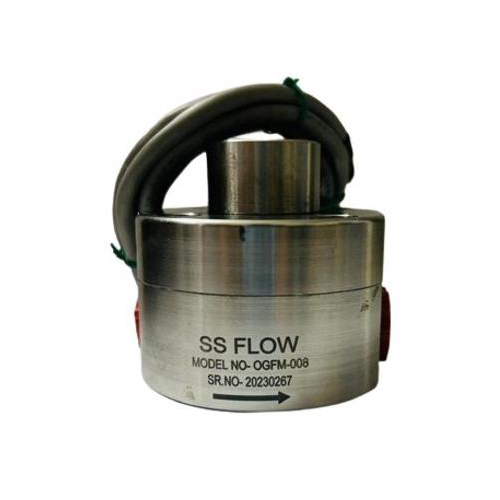
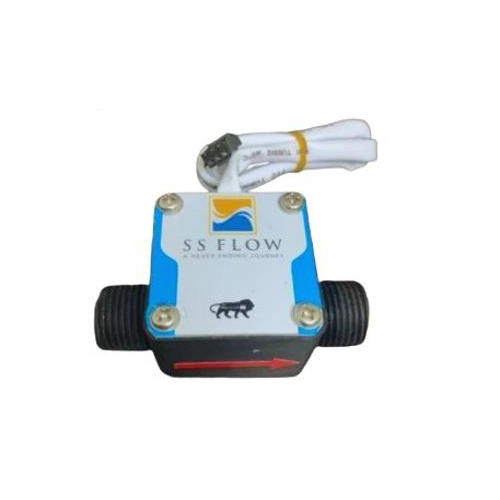
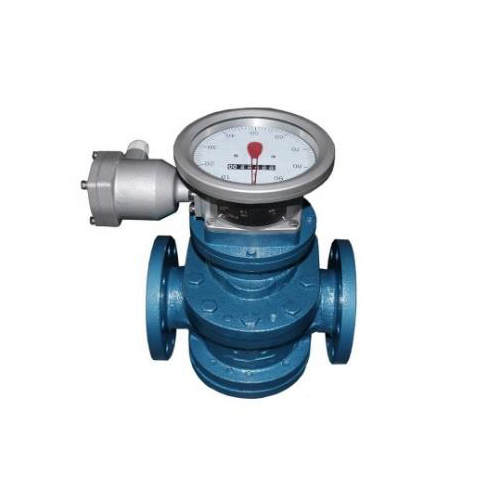
PD flow meter
The working principle of an oval gear flowmeter revolves around the movement of two oval gears within a chamber that is part of the flow path. Here’s a step-by-step explanation of how oval gear flowmeters operate. The flowmeter has a chamber through which the liquid flows. This chamber contains two oval-shaped gears that are closely fitted and mesh together. As the liquid flows through the flowmeter, it enters the chamber where the oval gears are located. The gears are designed such that they rotate as the liquid flows past them. The gears are in close proximity and mesh together. As they rotate, they displace a known volume of liquid per rotation. This displacement action is crucial for the measurement principle.The flowmeter measures the volume of liquid passing through it based on the rotation of the gears. The rotation of the gears is directly proportional to the volume of liquid passing through the flowmeter. Typically, oval gear flowmeters are equipped with sensors that detect the rotation of the gears. This rotation is then converted into electrical signals (such as pulses or frequency signals) that can be processed by electronics to calculate the flow rate. The design of the oval gears ensures that the flowmeter provides accurate measurements, even for fluids with varying viscosities. The precision comes from the consistent volume displacement per rotation of the gears.
Key Features
High Accuracy Measurement
- Ensures accurate and reliable flow measurement
- Suitable for demanding industrial applications
Wide Turndown Ratio
- Up to 20:1 turndown ratio
- Handles a wide range of flow rates
Low Flow Measurement Capability
- Capable of accurately measuring low flow rates
- Suitable for applications requiring precise low-flow measurement
High Viscosity Compatibility
- Performs efficiently with thick liquids
- Suitable for oil, fuel, syrup and chemicals
No Straight Pipe Requirement
- Does not require long straight pipe sections
- Offers flexible installation options
Bidirectional Flow Measurement
- Measures flow in both forward and reverse directions
- Provides flexible flow monitoring
Reliable for Custody Transfer
- Reliable measurement for custody transfer applications
- Suitable for accurate fluid transfer monitoring
Industrial Applications
Oil & Gas Industry
Reliable measurement and process monitoring solutions for oil and gas production, processing, and distribution applications.
Chemical & Petrochemical Industry
Suitable for accurate process measurement and monitoring in chemical and petrochemical manufacturing plants.
Food & Beverage Industry
Ideal for hygienic process applications in food and beverage production, processing, and utility systems.
Pharmaceutical Industry
Designed for reliable measurement in pharmaceutical manufacturing and process control applications.
Paint & Coating Industry
Suitable for monitoring and controlling fluid flow and process parameters in paint and coating production.
Power Plants
Reliable solutions for process measurement and monitoring across power generation and plant utility systems.
Automotive Industry
Used for process monitoring and fluid measurement in automotive manufacturing and production facilities.
Marine Industry
Suitable for fluid measurement and monitoring applications in marine vessels, shipyards, and offshore systems.
Hydraulic & Lubrication Systems
Ideal for monitoring hydraulic fluids, lubricants, and flow conditions in industrial machinery and equipment.
Custody Transfer & Batching Systems
Provides reliable and accurate measurement for custody transfer, batching, dosing, and controlled process operations.
Asphalt & Bitumen Industry
Designed for dependable flow measurement and process monitoring in asphalt and bitumen handling applications.
Industrial Process Control
Supports accurate measurement and monitoring for efficient process control across diverse industrial applications.
Technical Specifications
| Parameter | Details |
|---|---|
| Measurement Type | Volumetric Flow |
| Pressure | Upto 16 Bar |
| Line Size | DN14 - DN100 |
| Fluid Type | Liquids (clean / viscous / lubricating) |
| Accuracy | ±0.5% of reading |
| Repeatability | ±0.05% to ±0.2% |
| Temperature Range | -40°C to +150°C (typical) |
| Output | Pulse / 4-20mA / RS485 (Modbus RTU) |
Ordering Information _ SS FLOW _ PDFM _ Line Size
| Parameter | Details |
|---|---|
| MOC | 1. Aluminum Anodized / 2. SS304 / 3. SS316 |
| Protection | 1. IP65 / 2. IP67 |
| Pressure | 1. Up to 16 Bar / 2. Other |
| Explosion Proof | 1. Yes / 2. No |
| Connection | 1. Thread / 2. Flange |
| Output | 1. 4 to 20mA / 2. RS485 / 3. 4 to 20mA + HART / 4. Pulse / 5. NPN or PNP |
| Temperature | 1. 80 Degree C / 2. 120 Degree C / 3. 150 Degree C / 4. Above 150 Degree C |
| Relay | 1. Switching / 2. Batching / 3. With Addition Output / 4. NA |
| Power | 1. 24V DC / 2. 230V DC / 3. Other |
| Display Type | 1. Without / 2. Integral / 3. Remote |