
Water Quality Analysers
- Home
- Water Quality Analysers
Water Quality Analysers
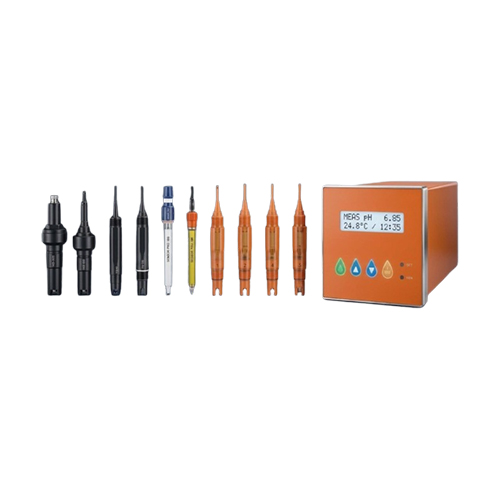
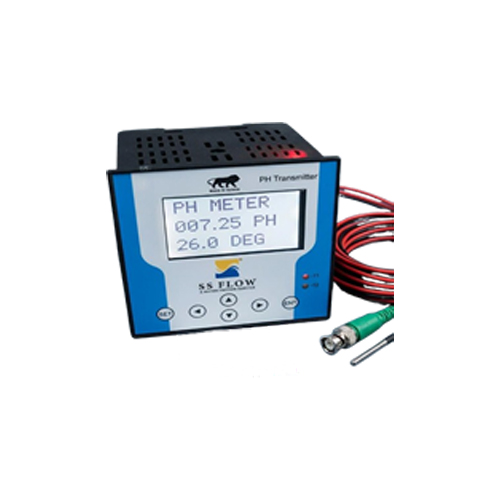
Key Features
Multi-Parameter Measurement
• Measures pH, conductivity, turbidity, DO, ORP, chlorine, etc.
• Suitable for comprehensive water quality analysis
• Suitable for comprehensive water quality analysis
High Accuracy & Stability
• Provides precise and reliable readings
• Minimal drift over long-term operation
• Minimal drift over long-term operation
Real-Time Monitoring
• Continuous online monitoring
• Fast response for process control
• Fast response for process control
User-Friendly Interface
• Digital LCD/LED display
• Easy configuration and navigation
• Easy configuration and navigation
Automatic Calibration
• Supports auto and manual calibration
• Improves measurement accuracy
• Improves measurement accuracy
Robust Industrial Design
• Corrosion-resistant enclosure
• Suitable for harsh environments
• Suitable for harsh environments
Data Logging & Storage
• Stores historical data
• Useful for analysis and reporting
• Useful for analysis and reporting
Communication Protocols
• Supports 4–20 mA, Modbus, RS485, HART
• Easy integration with control systems
• Easy integration with control systems
Alarm & Relay Outputs
• Configurable high/low alarms
• Suitable for automation and safety control
• Suitable for automation and safety control
Low Maintenance
• Self-cleaning sensor options available
• Long service life
• Long service life
Wide Application Range
• Used in water treatment, pharma, food & beverage, and chemical industries
Working Principle
1. pH Meter – Working Principle
- Based on electrochemical measurement.
- Uses a glass electrode and reference electrode.
- When immersed in solution, a potential difference (mV) is generated depending on hydrogen ion (H⁺) concentration.
- The analyzer converts this voltage into pH value (0–14 scale).
2. Conductivity – Working Principle
- Based on the ability of water to conduct electrical current.
- Two or four electrodes apply an AC voltage across the solution.
- The current flow depends on ionic concentration.
- Higher ions → higher conductivity (μS/cm or mS/cm).
3. Chemical Oxygen Demand (COD) – Working Principle
- Measures the amount of oxygen required to oxidize organic matter.
- Water sample is treated with a strong oxidizing agent (like potassium dichromate).
- Organic matter gets oxidized.
- The analyzer measures color change or absorbance using photometric method. Result expressed in mg/L of O₂.
4. Dissolved Oxygen (DO) – Working Principle
Two common methods:
a) Electrochemical (Clark Electrode):
- Oxygen diffuses through a membrane.
- It reacts at the cathode, producing current proportional to DO level.
b) Optical Method: - Uses luminescent sensor.
- Oxygen quenches the light signal.
- Change in light intensity/lifetime gives DO concentration.
5. Turbidity – Working Principle
- Based on light scattering principle.
- A light beam passes through water.
- Suspended particles scatter light.
- Detector measures scattered light at 90° (nephelometric method).
- Output in NTU (Nephelometric Turbidity Units).
6. Chlorine – Working Principle
Two methods:
a) Colorimetric Method:
- Chlorine reacts with reagent (DPD).
- Produces pink color.
- Intensity measured photometrically.
b) Amperometric Method: - Measures current produced due to chlorine reaction at electrode.
- Current ∝ chlorine concentration.
7. Ammonia – Working Principle
- Typically based on Ion-Selective Electrode (ISE) or colorimetric method.
ISE Method: - Ammonia gas diffuses through membrane.
- Changes internal pH of electrode.
- Potential difference corresponds to ammonia concentration.
Colorimetric Method: - Ammonia reacts with reagents to form colored compound.
- Analyzer measures absorbance.
Industrial Applications
Water Treatment Plants (WTP)
• Monitoring pH, turbidity, chlorine, and conductivity
• Ensures safe and potable water quality
• Ensures safe and potable water quality
Wastewater Treatment Plants (ETP/STP)
• Measurement of COD, ammonia, and dissolved oxygen
• Helps in pollution control and regulatory compliance
• Helps in pollution control and regulatory compliance
Power Plants
• Boiler and cooling water monitoring
• Controls pH, conductivity, and dissolved oxygen to prevent corrosion and scaling
• Controls pH, conductivity, and dissolved oxygen to prevent corrosion and scaling
Oil & Gas Industry
• Produced water and effluent monitoring
• Ensures environmental discharge standards
• Ensures environmental discharge standards
Chemical & Petrochemical Industries
• Process water quality control
• Monitoring of pH, conductivity, and chemical contaminants
• Monitoring of pH, conductivity, and chemical contaminants
Pharmaceutical Industry
• High purity water (PW/WFI) monitoring
• Control of conductivity, TOC, and microbial parameters
• Control of conductivity, TOC, and microbial parameters
Food & Beverage Industry
• Water quality for processing and cleaning
• Chlorine and turbidity monitoring for hygiene standards
• Chlorine and turbidity monitoring for hygiene standards
Pulp & Paper Industry
• Process water and effluent monitoring
• Controls chemical usage and discharge quality
• Controls chemical usage and discharge quality
Mining & Metals Industry
• Monitoring of slurry water and discharge
• Controls heavy metals, turbidity, and pH
• Controls heavy metals, turbidity, and pH
Aquaculture & Fisheries
• DO, pH, ammonia monitoring
• Maintains optimal conditions for aquatic life
• Maintains optimal conditions for aquatic life
Municipal Water Supply Systems
• Real-time water quality monitoring
• Ensures compliance with public health standards
• Ensures compliance with public health standards
Environmental Monitoring
• Rivers, lakes, and groundwater analysis
• Pollution tracking and ecological protection
• Pollution tracking and ecological protection
Technical Specifications
| Parameter | Specification |
|---|---|
| Measured Parameters | pH, Conductivity, DO, COD, Turbidity, Chlorine, Ammonia |
| pH Range | 0 to 14 pH |
| pH Accuracy | ±0.1 pH |
| Conductivity Range | 0 – 200 mS/cm (depending on sensor) |
| Conductivity Accuracy | ±1% of full scale |
| Dissolved Oxygen (DO) Range | 0 – 20 mg/L |
| DO Accuracy | ±0.2 mg/L |
| COD Range | 0 – 5000 mg/L (customizable) |
| COD Accuracy | ±5% of reading |
| Turbidity Range | 0 – 1000 NTU |
| Turbidity Accuracy | ±2% of reading |
| Chlorine Range | 0 – 20 mg/L |
| Chlorine Accuracy | ±2% of reading |
| Ammonia Range | 0 – 100 mg/L |
| Ammonia Accuracy | ±5% of reading |
| Response Time | < 30 seconds |
| Display | LCD / LED Digital Display |
| Output Signal | 4–20 mA, RS485 (Modbus RTU), Optional HART |
| Power Supply | 230V AC / 24V DC |
| Operating Temperature | -10°C to 60°C |
| Protection Class | IP65 / IP67 |
| Enclosure Material | ABS / SS316 (optional) |
| Calibration | Automatic / Manual |
| Mounting | Panel / Wall / Field Mount |
| Data Logging | Inbuilt memory with USB/SD card (optional) |
| Alarm Output | Relay outputs for high/low limits |