
Thermal Flow Switch/Sensor
- Home
- Thermal Flow Switch/Sensor
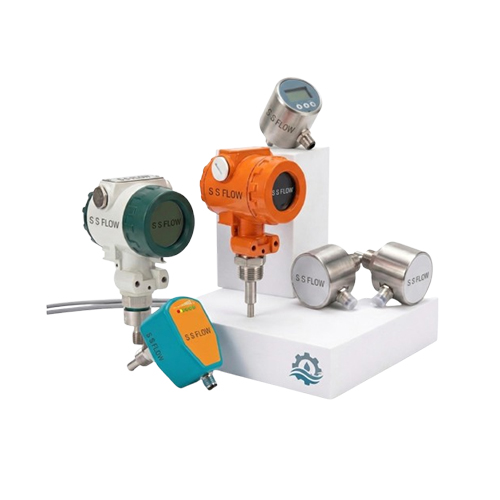
Thermal Flow Switch/Sensor
The Thermal Flow Switch And Sensor is a highly efficient and automatic control device used for monitoring and regulating the flow of liquids or gases in various industrial applications. Made of durable stainless steel material, this product can withstand extreme temperatures ranging from -20 to 80C Celsius. The product comes in an attractive orange color, making it easy to identify and install in pipelines. With a voltage of 24 V DC Volt, the Thermal Flow Switch And Sensor provides accurate and reliable flow control and measurement. Its advanced technology ensures precision and consistency in flow detection, making it an ideal choice for critical industrial processes. This product is easy to install and requires minimal maintenance, making it a cost-effective solution for your flow control needs.
Key Features
No Moving Parts
• Solid-state design ensures low maintenance and long service life
High Sensitivity
• Detects very low flow rates of liquids and gases accurately
Fast Response Time
• Provides instant switching output for flow / no-flow conditions
Wide Application Range
• Suitable for liquids, gases, and air flow monitoring
Compact & Robust Design
• Small size with rugged stainless steel housing for industrial environments
Adjustable Set Point
• Flow threshold can be easily configured as per process requirement
Temperature Compensation
• Maintains accuracy even with temperature variations
LED / Digital Indication
• Visual indication for flow status and switching output
High Reliability
• Works reliably in harsh conditions like vibration and pressure changes
Wide Operating Range
• Suitable for high pressure and temperature applications
Easy Installation
• Threaded or flanged mounting options available
Low Pressure Drop
• Minimal obstruction to flow compared to mechanical switches
Working Principle
A thermal flow switch works on the principle of heat transfer using the concept of convective cooling.
- Basic Concept
It typically consists of: - Heated sensor (heater element)
- Temperature sensor (RTD / thermistor)
The device continuously measures how much heat is carried away by the flowing fluid. - Step-by-Step Working
- Heating Phase
o The sensor probe contains a heating element which is electrically heated to a constant temperature above the fluid temperature. - Reference Measurement
o A temperature sensor measures the actual temperature of the heated element. - No Flow Condition
o When there is no flow, heat remains around the sensor.
o The temperature of the sensor stays high and stable. - Flow Condition
o When fluid (liquid/gas) starts flowing: - It absorbs heat from the sensor.
- This causes a drop in temperature of the heated element.
- Heat Loss Detection
o The system measures the difference between heated and reference temperature.
o The rate of heat loss is directly proportional to flow velocity. - Switching Action
o When flow reaches a preset value: - The electronics trigger a switch output (ON/OFF).
o Used for: Flow/no-flow detection - Pump protection
- Dry run prevention
- Measurement Principle Types
1. Constant Power Method
o Heater is supplied with constant power.
o Temperature drop indicates flow rate.
2. Constant Temperature Difference (ΔT) Method
o Maintains constant temperature difference between sensors.
o Power required to maintain ΔT is proportional to flow.
Industrial Applications
Cooling Water Systems
• Monitoring flow in cooling lines of compressors, furnaces, and heat exchangers
• Prevents overheating and equipment damage
• Prevents overheating and equipment damage
Pump Protection (Dry Run Protection)
• Detects no-flow condition in pipelines
• Automatically protects pumps from dry running
• Automatically protects pumps from dry running
HVAC Systems
• Used in air ducts and chilled water lines
• Ensures proper air and water circulation
• Ensures proper air and water circulation
Lubrication Systems
• Monitors flow of lubricating oil in machinery
• Protects bearings and rotating equipment from failure
• Protects bearings and rotating equipment from failure
Chemical Processing Plants
• Flow detection of chemicals, solvents, and acids
• Ensures safe and controlled process operation
• Ensures safe and controlled process operation
Water & Wastewater Treatment
• Detects flow in filtration units, pipelines, and dosing systems
• Ensures proper system functioning
• Ensures proper system functioning
Food & Beverage Industry
• Used for flow monitoring of milk, beverages, and process liquids
• Suitable due to hygienic and no moving parts design
• Suitable due to hygienic and no moving parts design
Pharmaceutical Industry
• Ensures accurate flow in clean and sterile processes
• Used in purified water and CIP systems
• Used in purified water and CIP systems
Compressed Air Systems
• Detects flow in air pipelines
• Helps in energy saving and leak detection
• Helps in energy saving and leak detection
Boiler & Steam Systems
• Monitors flow of feed water and steam lines
• Ensures safe boiler operation
• Ensures safe boiler operation
Semiconductor & Electronics Industry
• Used for cooling water and ultra-pure fluids
• Ensures high precision process control
• Ensures high precision process control
Fire Protection Systems
• Detects water flow in sprinkler systems
• Triggers alarms during fire conditions
• Triggers alarms during fire conditions
Technical Specifications
| Parameter | Specification |
|---|---|
| Measurement Principle | Thermal dispersion (heat transfer) |
| Measured Medium | Liquids / Gases / Air |
| Switching Output | 4–20mA / PNP / NPN / Relay |
| Output Type | NO / NC selectable |
| Response Time | 1 – 10 seconds |
| Accuracy | ±1 to ±10% of set point |
| Repeatability | ±1% |
| Operating Temperature | -20°C to +80°C (up to 120°C on request) |
| Process Pressure | Up to 100 bar (depending on model) |
| Power Supply | 12–30 V DC / 24 V DC |
| Current Consumption | < 100 mA |
| CONSTRUCTION & FEATURES | |
| Process Connection | Threaded (G 1/2”, G 1”, NPT) / Flanged |
| Wetted Material | Stainless Steel (SS304 / SS316) |
| Housing Material | SS / Aluminum / Plastic |
| Protection Class | IP65 / IP67 |
| Indication | LED status indication |
| Set Point Adjustment | Potentiometer / Digital display |
| Mounting Position | Any (recommended horizontal for liquids) |
| Temperature Compensation | Yes |
| Certification (Optional) | CE / ATEX / ISO |
| Application | Flow / No-flow detection |